The global surge of right-wing populism in the West, characterized by anti-immigrant nativism, social conservatism, and a distrust of globalist elites—from the electoral successes of far-right parties in Europe to the continued dominance of the "America First" movement—finds a deeply troubling parallel in Japan's own political shift toward national conservatism under Prime Minister Sanae Takaichi.
While Japanese conservatism historically differs by being less anti-establishment than its Western counterpart, Takaichi's rise, marked by her unapologetic militarism, historical revisionism, and hardline anti-immigration rhetoric, represents a dangerous convergence with this global trend, seeking to redefine national identity through exclusion and assertiveness. This alignment is alarming because it risks replacing established democratic norms with strident ethno-nationalism, isolating Japan from its regional neighbors through escalation (as seen in the recent China, South Korea, and Russia disputes), and ultimately destabilizing the rules-based international order with a chorus of powerful nations prioritizing nationalistic self-interest over collective stability.
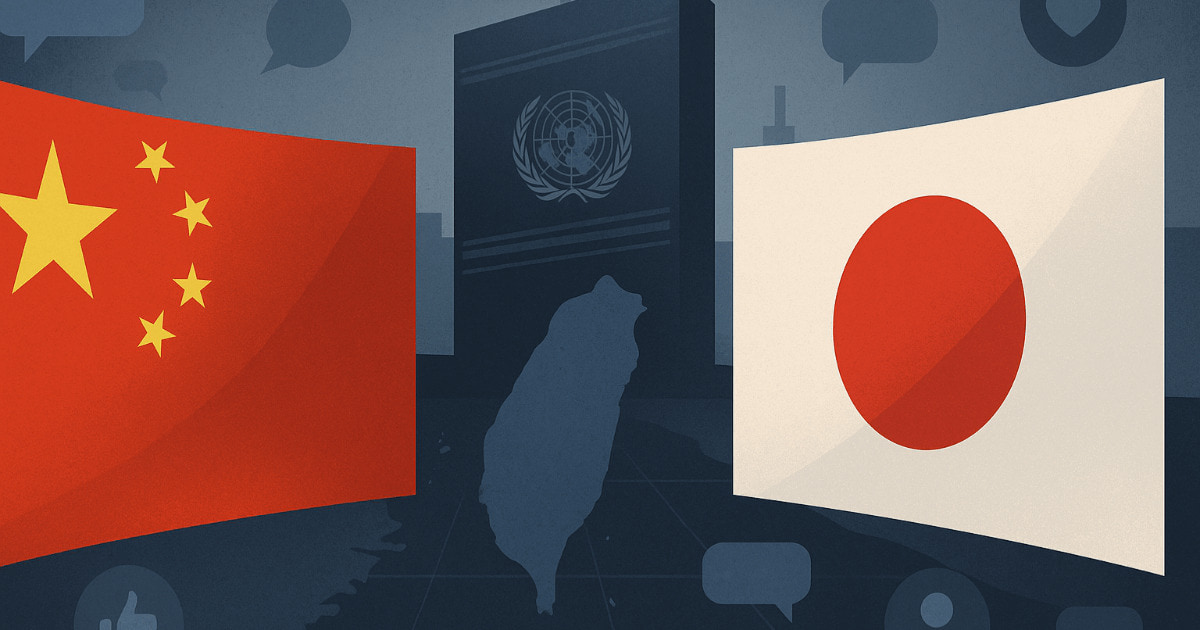
Recent statements by Japanese Prime Minister Sanae Takaichi in the Diet, the Japanese parliament, claiming that "a Taiwan emergency is a Japanese emergency", and that “Japan wouldn’t rule out the option of military intervention during a hypothetical conflict in Taiwan” not only infuriates China but also exposes the severe threat posed by Japanese right-wing forces to regional security and stability.
The deep-rooted animosity between these Asian powers dates back centuries to the 16th century when Japanese pirates ravaged the coastal regions of southeastern China. This historical tension is further exacerbated by the heinous atrocities carried out by the Imperial Japanese army during World War II.
Takaichi’s rhetoric regarding Taiwan only adds fuel to the fire. More importantly, it is part of a long-term strategy by Japanese right-wing faction. Its historical roots can be traced back to the expansionist traditions of the Meiji Restoration. Today, these forces have deeply permeated the political system, forming a "tripartite nexus" consisting of Zaibatsu funding, factional manipulation, and religious/educational infiltration. The international community must remain vigilant against the Japanese right-wing's attempts to resurrect militarism, preventing them from breaking through the constraints of the Peace Constitution and destabilizing the Asia-Pacific region.
China, under the rule of CCP, responded to the Japanese Prime Minister's remarks on Taiwan with intense diplomatic and retaliatory measures, immediately summoning the Japanese Ambassador to lodge a strong protest and demanding a retraction of the "extremely wrong and dangerous" statements, which CCP officials condemned as a "crude interference" in “China's internal affairs” and a breach of the "One-China principle."
However, there is a crucial distinction between the "One-China Principle" insisted upon by the CCP and the "One-China Policy" adhered to by most countries around the world. The core difference is that the “One-China Principle” is a demand from the CCP that asserts “Taiwan is an inalienable part of the PRC's territory” and that the PRC is the “sole legitimate government of all China”, requiring countries to formally recognize this claim upon establishing diplomatic relations. In contrast, the “One-China Policy” is the diplomatic framework adopted by most countries, such as the United States, which “recognizes the PRC as the sole government of China” but only “acknowledges”—rather than endorses or accepts—Beijing's position that Taiwan belongs to it, thereby allowing for the continuation of robust, though unofficial, relations with Taiwan claim to be the “Republic of China”, under a deliberate policy of strategic ambiguity.
Takaichi’s remark is seen by CCP as a threat of war and a breakaway from this strategic ambiguity. The rhetorical escalation between these two nations was backed by a stern military warning from the Chinese Defense Ministry, cautioning that any Japanese use of force over Taiwan would result in "a crushing defeat" and a "heavy price," alongside a highly controversial and misread social media post by a diplomat apparently threatening the Prime Minister. Furthermore, Beijing deployed punitive countermeasures, including issuing a travel advisory urging citizens to avoid Japan, reportedly suspending imports of Japanese seafood, postponing cultural events and film releases, publicly rebuking Japan's qualification for a permanent UN Security Council seat, and increasing military presence via Coast Guard patrols near the disputed Diaoyu Islands.
China's strong reaction originates from the Japanese Prime Minister's comments crossing a sensitive and significant boundary regarding its core national interest: Taiwan, viewed as an integral part of its territory and a domestic matter. Any hint of foreign military involvement is construed as a direct challenge to Chinese sovereignty and its firm objective of reunification, even through force if required. This is also perceived as a breach of the spirit of the 1972 Joint Communiqué, where Japan recognized China's stance on Taiwan. Importantly, connecting a Taiwan conflict to Japan's ability to engage in collective self-defense is seen as part of a broader plan by elements in Japan seeking remilitarization, without adequately addressing the historical wrongs committed by Imperial Japan.
Sanae Takaichi’s assertion that "a Taiwan emergency is a Japanese emergency" may appear to be an exception in Japanese politics, but in reality, it aligns with the age-old traditions of the Japanese right-wing. The history of these forces dates back to the "Genyosha" (Dark Ocean Society) founded in 1881, the first right-wing group in Japanese history. Its core ideology was "Continental Expansion" and "Pan-Asianism," advocating for Japan to establish hegemony in Asia through military expansion. In 1901, core members of the Genyosha, such as Mitsuru Toyama, established the "Kokuryukai" (Black Dragon Society). Named after the Black Dragon River (Amur River), this organization touted Japanese Pan-Asianism, instigated the encroachment upon China, directly participated in the "Mukden Incident" of 1931, and pushed for the establishment of the puppet state of Manchukuo, becoming a tool for Japanese militaristic aggression.
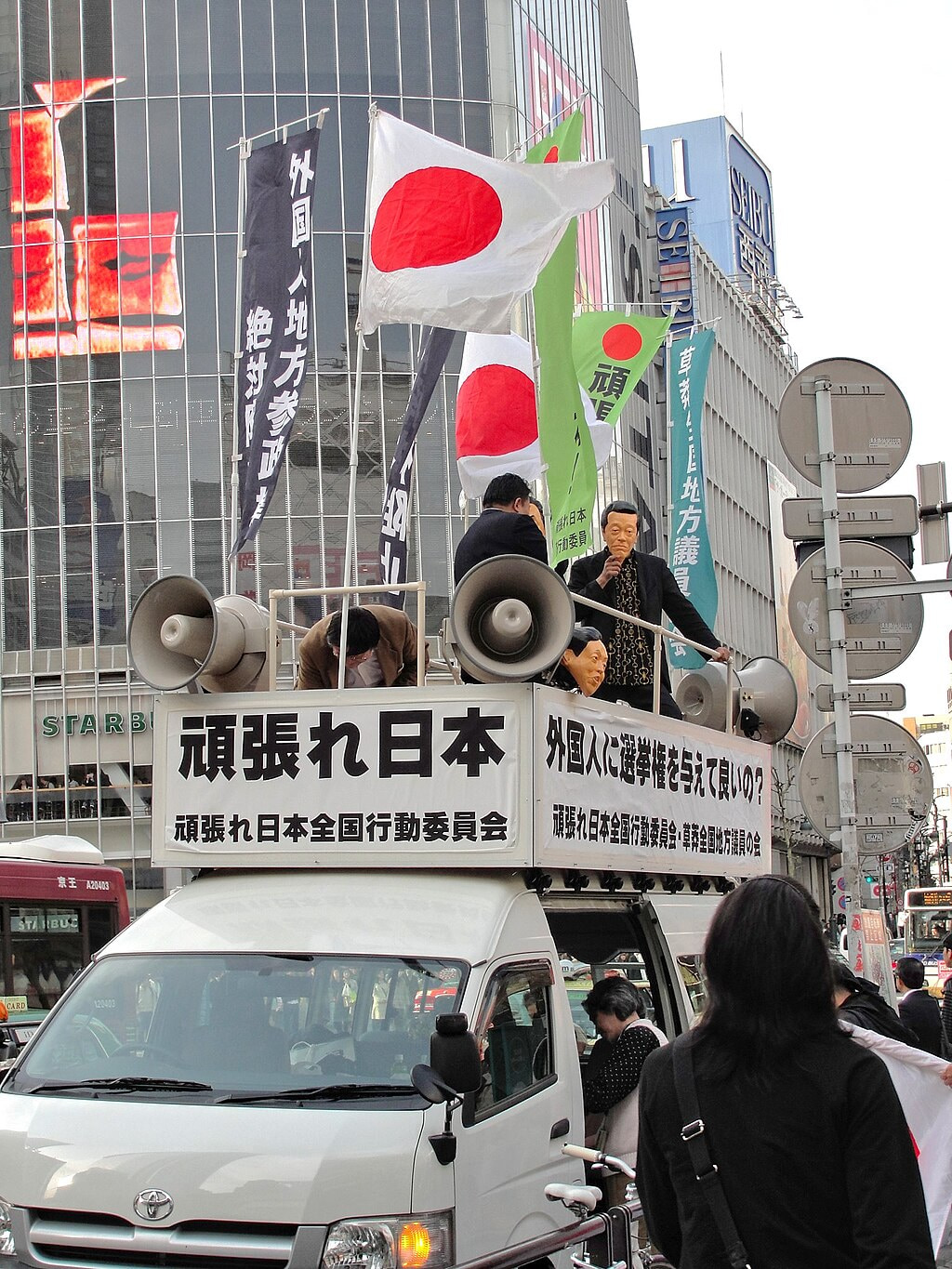
The Japanese right-wing’s ambitions regarding Taiwan are equally deeply rooted in history. After the First Sino-Japanese War in 1895, Japan seized Taiwan through the Treaty of Shimonoseki, initiating 50 years of colonial rule. Japanese right-wing forces view Taiwan as a crucial component of their historical expansionism and are now attempting to bind the Taiwan issue to Japan's security once again to provide a pretext for breaking the limits of the Peace Constitution. Takaichi's statements directly mirror the rationale underlying the invocation of "collective self defense" in the 2015 security legislation, seeking to position Japan as a pivotal frontline ally within the US Indo-Pacific strategy.
Takaichi's discourse concerning Taiwan forms a crucial element of the broader strategy of Japan's right-wing. A member of the Seiwa Seisaku Kenkyūkai (Abe Faction), which constitutes the core of conservative factions within the Liberal Democratic Party (LDP), Takaichi's influence is intricately linked to the crucial backing of the "Shikōkai" (Aso Faction) under Taro Aso. Controlling 43 Diet votes, the Aso Faction stands as one of the most influential factions in Japanese politics. Takaichi, essentially a figurehead for the Aso faction, represents the continuation of the right-wing agenda orchestrated by the power players of Japanese politics. The Aso Faction's historical stance, marked by fiscal conservatism, advocacy for defense reinforcement, a tough stance on China and South Korea, and a reliance on the US, aligns closely with Takaichi's rhetoric.
The evolutionary trajectory of Japanese right-wing forces began with a pre-war surge spanning three critical phases: Gestation, Expansion, and Fascism. Originating in the late 19th century with the Genyosha’s promotion of Emperor-centric Pan-Asianism, the movement metastasized during the Expansion Period (1912–1930), where right-wing groups multiplied from a mere hundred to over a thousand. This ideological swelling culminated in the Fascist Period (1931-1945), characterized by a symbiotic alliance between radical factions—such as the coup-advocating "reformist right" and the Black Dragon Society—and the military establishment. Together, they engineered violent domestic coups and imperialist expansion, most notably instigating the invasion of China and the establishment of Manchukuo, thereby solidifying the infrastructure for state-sponsored militarism.
In the post-war era, the survival of these forces was secured not by chance, but by a strategic American calculation during the Cold War to preserve them as an "anti-communist, pro-American" bulwark. Rather than facing total dismantlement, right-wing networks transitioned through phases of quiet revival to a modern resurgence, expanding to 840 registered groups by 1989. Today, these forces actively preserve pre-war ideologies of ethnic supremacy and militarism, embedding them into the modern sociopolitical fabric through corporate patronage and historical revisionism. This continuity is starkly evident in the corporate backing of the Nippon Kaigi by industrial giants like Mitsubishi and Mitsui, and the controversial enshrinement of Class-A war criminals at Yasukuni Shrine—a persistent symbol of the right-wing’s refusal to acknowledge Japan’s history of aggression.
Contemporary Japanese right-wing forces have consolidated a formidable political and economic infrastructure centered on the Liberal Democratic Party (LDP) and the influential advocacy group, Nippon Kaigi. With a network spanning all 47 prefectures and including 256 lawmakers, Nippon Kaigi effectively operates as a "shadow cabinet" driving an agenda of constitutional revisionism. This political machinery is sustained by the staunch financial backing of traditional Zaibatsu conglomerates—such as Mitsubishi, Mitsui, and Sumitomo—which have transitioned from their wartime roles as munitions monopolists to modern corporate patrons. Through coordinated leadership and funding, these industrial titans ensure a seamless continuity between pre-war militarist roots and current conservative policy.
Socially, this network permeates the public sphere through a deep-seated collusion with religious groups and educational institutions. The assassination of Shinzo Abe exposed the "politics-cult nexus" involving the Unification Church, a relationship originally forged by Nobusuke Kishi that effectively shielded the group from legal scrutiny for decades. Simultaneously, right-wing influence extends into education through institutions like Moritomo Gakuen, which has promoted ultranationalist indoctrination by teaching children imperial military songs and xenophobic rhetoric. These entanglements have frequently erupted into major corruption scandals, such as the 2017 "land price gate," where government documents were tampered with to conceal illicit deals benefiting right-wing entities linked to the highest levels of state power.
The military agenda of Japanese right-wing forces represents a profound shift in regional security, marked by a record-breaking fiscal 2025 defense budget of 8.84 trillion yen that shatters the post-war tradition of capping spending at 1% of GDP. Capital is being aggressively funneled into offensive capabilities that violate the principle of "Exclusive Defense," including hyper-velocity projectiles and improved Type 12 missiles with a range exceeding 1,000 kilometers—sufficient to cover the Taiwan Strait. This hardware buildup is matched by structural reorganization, notably the integration of amphibious units and US-made assault vehicles into a rapid deployment brigade designed specifically for island recapture operations. These moves are reinforced by a strategic pivot to categorize the Taiwan Strait as a "survival crisis situation" within US-Japan defense guidelines, effectively legitimizing potential Japanese military intervention under the guise of "self defense."
This re-militarization is fueled by a systematic campaign of historical revisionism intended to sanitize Japan’s wartime aggression and rally public support. The 2025 textbook revisions, which reduce the Nanjing Massacre to a mere "controversial incident," alongside the continued reverence for Class-A war criminals secretly enshrined at Yasukuni Shrine, serve to normalize a distorted national narrative. This ideological conditioning has yielded tangible results, with polls indicating that 43% of the public now views Japan’s past wars as necessary. By erasing historical atrocities and reframing aggression as self-preservation, right-wing forces are dismantling the pacifist constraints of the post-war order to clear the path for a resurrected militarism.
The rise of Japanese right-wing also escalates the tension with other neighbors in East Asia. The dispute between Japan and South Korea over the Dokdo islets (known as Takeshima in Japan) intensified during the early period of Prime Minister Sanae Takaichi's term, centering on renewed territorial assertions by Tokyo. In November 2025, the Japanese government significantly expanded its "Territory and Sovereignty Exhibition Hall" in Tokyo, using the venue to assert more strongly than before that the islets are Japan's "inherent territory," a move immediately backed by official rhetoric. In response, South Korea's Ministry of Foreign Affairs summoned a senior Japanese diplomat to lodge a strong protest, demanding the immediate closure of the expanded facility and condemning Japan's "unjust claims" as a failure to acknowledge its colonial-era history.
This territorial friction quickly spilled over into military relations, stalling momentum toward greater defense cooperation. Japan initiated the disruption by scrapping a planned refueling of South Korean military jets in Okinawa after the aircraft had flown near the contested islets, which Japan saw as a provocation. In direct retaliation, the South Korean Navy then indefinitely postponed a joint search-and-rescue drill with the Japan Maritime Self-Defense Force that had been scheduled for late November.
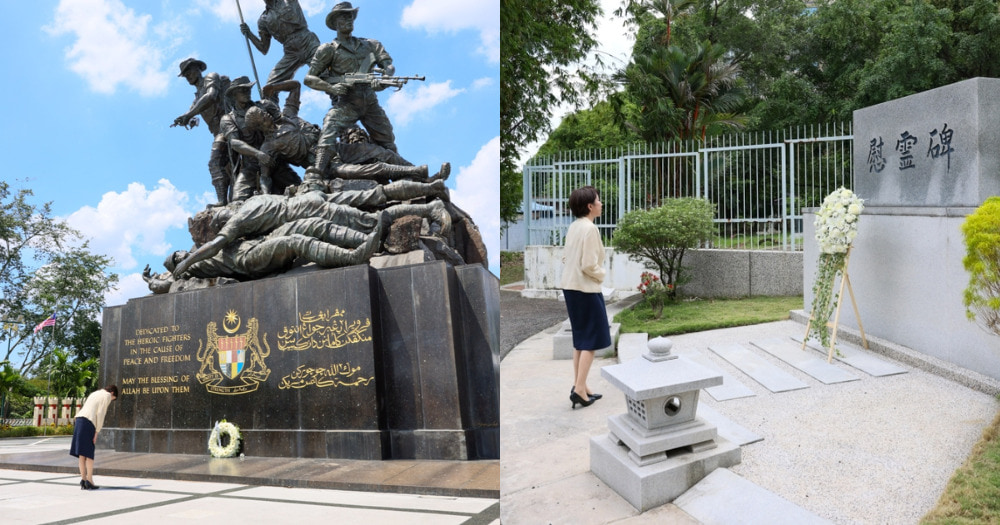
Similarly, relations between Japan and Southeast Asian nations are also being tested. In late October, during her visit to Kuala Lumpur for the ASEAN summit, Takaichi drew backlash after visiting a Japanese war cemetery and posting on social media that she was commemorating Japanese "ancestors who lost their lives in Malaysia." Malaysian critics and scholars viewed this as profoundly offensive and tone-deaf, as it appeared to honor the aggressors without acknowledging the brutal three-and-a-half-year Japanese occupation of Malaya (1941–1945) and the accompanying war crimes, such as the Sook Ching massacre. Given her known ultraconservative and historical revisionist stance, her actions were seen as attempting to distort the history of the occupation and neglect the immense suffering endured by the victims and their descendants. The tension between Japan and its neighbors is expected to escalate in the coming years, as Japanese right-wing gaining ground in domestic politics.
To effectively check the Japanese right-wing, the international community must operationalize a dual strategy of legal pressure and targeted economic coercion. Legal bodies, including the UN Security Council and UNESCO, should rigorously enforce the Potsdam Declaration to challenge historical revisionism and Yasukuni Shrine visits, building on domestic precedents like the 2004 ruling against Prime Minister Koizumi. Simultaneously, economic leverage remains a decisive tool; despite diversification efforts, Japan remains dependent on China for 82% of the high-purity rare earths essential for military production. A coordinated restriction of these critical resources by China and South Korea, coupled with EU supply chain shifts, would expose the fragility of Japan’s high-tech industrial base and severely hamper its re-militarization capabilities.
Geopolitically, the focus must shift to solidifying the China-ASEAN security architecture to counterbalance Japanese interventionism. While ASEAN maintains a complex political stance, its overwhelming economic pivot toward China provides a foundation for strengthening the "Code of Conduct in the South China Sea" and delegitimizing external military interference through joint exercises. This strategic containment must be reinforced by a coordinated "soft power" offensive to preserve historical truth. By establishing a trilateral history education fund and amplifying media narratives that expose wartime atrocities—evidenced by the massive engagement with documentaries on Yasukuni war criminals—nations can immunize the global public against right-wing historical nihilism.